THE IRON SENSEI JOURNAL
Karate. Health. Fitness. Psychology. Philosophy. Reflections from a Life in the Martial Arts.
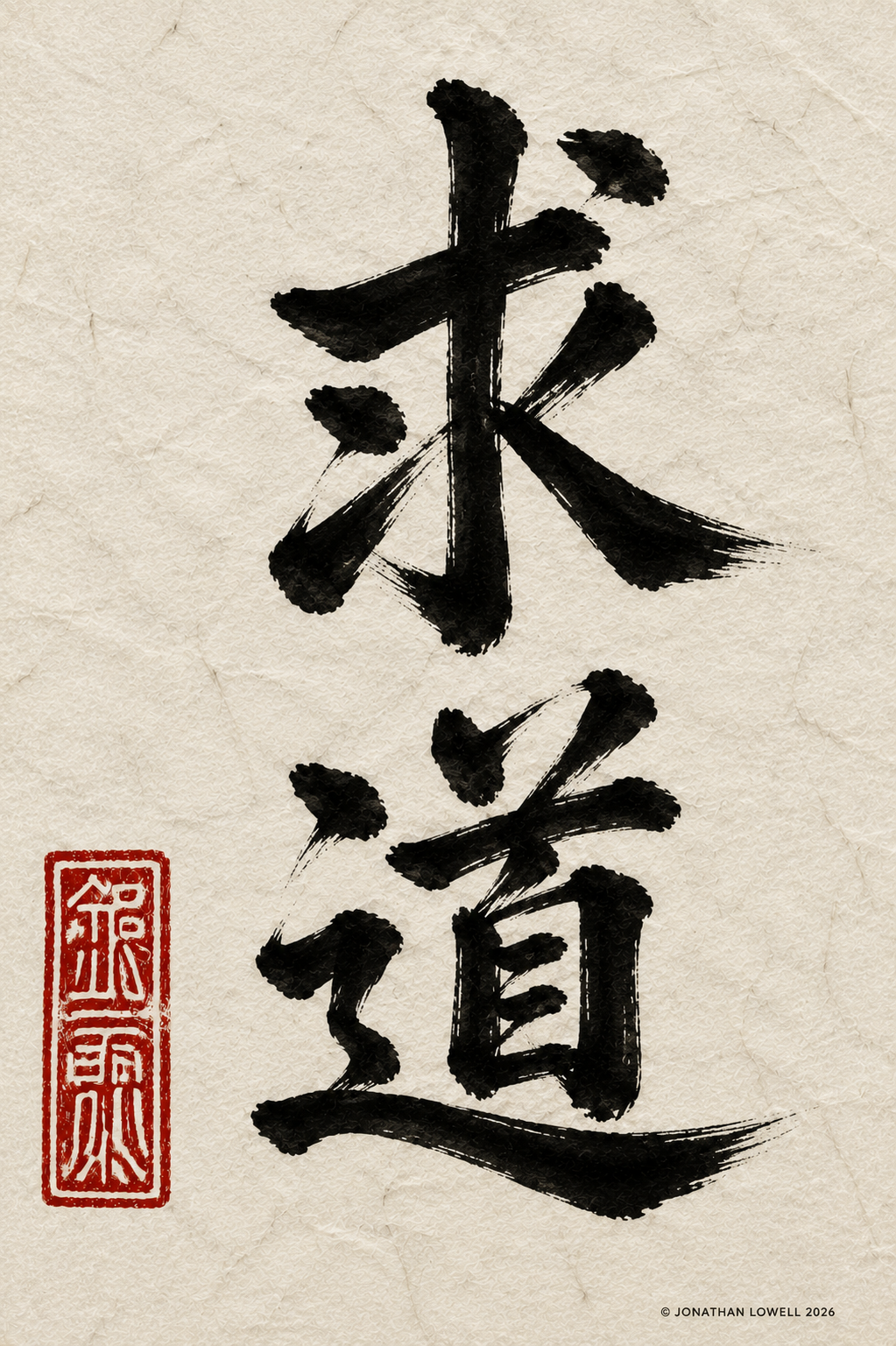
Seeking The Way
By Jonathan Lowell – The Iron Sensei
I'm sixty-six years old, and after more than fifty years of training in Goju-Ryu Karate, I'm still a student.
People sometimes ask me why I'm studying Southern Praying Mantis Kung Fu. They wonder why I spend time reading old books, researching the Bubishi, writing articles about Busaganashi, and exploring the Chinese roots of Okinawan karate.
The answer is simple.
A Sensei who stops being a student stops growing.
Over the years I've met many kinds of instructors.
Some earned their black belts, opened schools, taught classes, attended seminars, paid their federation dues, and every few years received another promotion. Some built large schools, became tournament directors, or held influential positions within their organizations.
There is nothing wrong with building a successful school. Teaching is an honorable calling.
But I have always admired another path.
The instructors who remained students.
The ones who trained under their teachers for years before opening a dojo. The ones who traveled to learn. The ones who competed—not just as judges or referees, but as competitors willing to put everything on the line.
Owning a school and competing takes courage.
If you lose, you lose in front of your students.
There are no excuses.
I remember when I was the assistant instructor under my senpai, John Tronolone. We attended a tournament, and I placed third in kata. I walked away with a beautiful trophy.
It wasn't just the trophy that mattered.
It was knowing that my students saw me step onto the floor, put in the work, and earn my place.
They saw the receipts.
In martial arts, rank is awarded.
Experience is earned.
The bruises.
The early mornings.
The long drives to seminars.
The corrections from your teacher.
The victories.
The defeats.
Those are the receipts that no certificate can replace.
Even today, at sixty-six years old, I'm still researching.
I'm studying Southern Praying Mantis.
I'm comparing Chinese and Okinawan traditions.
I'm exploring the history of the Bubishi.
I'm asking questions about kata that I never thought to ask thirty years ago.
Some people think reaching a high rank means you've arrived.
I think it means you've earned the privilege of asking better questions.
Chojun Miyagi, the founder of Goju-Ryu Karate, once observed that studying karate without a teacher is like walking in the dark without a lantern. While the great masters were still alive, he believed we should seek them out, ask questions, and learn everything we could from them.
That humility has always stayed with me.
If the founder of Goju-Ryu still considered himself a student, why should I ever believe my own education is complete?
Peter Urban never stopped exploring.
Morio Higaonna never stopped researching.
The greatest teachers I've known were also the greatest students.
That is the path I hope to walk for the rest of my life.
Not simply to teach karate.
Not simply to wear another stripe on my belt.
But to remain curious.
To remain humble enough to say, "I don't know."
To keep learning for as long as I can stand in Sanchin.
Because in the end, I believe the finest compliment anyone could pay a martial artist is not that he became a great Sensei.
It is that, after a lifetime of teaching, he never stopped being a student.
Osu.
About the Author
Jonathan Lowell, known as The Iron Sensei, has trained in Goju-Ryu Karate-Do for more than five decades. A student of Peter Urban and Morio Higaonna, he has competed, taught thousands of students, and operated his own dojo for over twenty years. He is also a licensed massage therapist, author of The Hallandale Diet, and founder of the online coaching program Iron Rebuild, where he helps men and women over 40 lose weight, build strength, improve their health, and regain confidence. Through The Iron Sensei Journal, he shares the history, philosophy, and living traditions of karate while drawing on a lifetime of training and continuous study.